 How-to
10 Ways Pest Companies Handle Bat Removal
Quick Summary
Yes, many pest companies remove bats, but not all of them do. Bats are protected wildlife in many states, so you need a provider with the right licensing that uses a humane method such as one-way exclusion. Ask whether the technician holds a nuisance wildlife license.
- A general pest license may not cover bats; ask for a nuisance wildlife or wildlife control license.
- Exclusion is the standard humane method, and bats can squeeze through gaps about the width of a pencil.
- Exclusion must be timed around the maternity season, because pups cannot fly and may die inside walls or attics.
- Ask for a written quote with line items for exclusion, sealing and cleanup, plus a follow-up inspection.
- Bats can carry rabies, so contact your local health department if a bat may have had contact with a person.
Table of Contents
- Do Pest Companies Remove Bats, and Who Should You Call?
- Pest Control Companies vs. Nuisance Wildlife Specialists
- How Professionals Remove Bats Humanely Through Exclusion
- Bat Removal Cost in the United States: What Shapes the Quote
- How to Vet a Bat Removal Provider Before You Book
- Legal Protections, Rabies Risk and Keeping Bats From Coming Back
- Booking Your Bat Exclusion With Dukes Pest & Wildlife
- Frequently Asked Questions
Do Pest Companies Remove Bats, and Who Should You Call?
Last Updated: November 14, 2026
Yes, many pest companies remove bats, but not all of them do. Bats are protected wildlife in many states, so the company you call needs the right licensing and a humane method. When you search for do pest companies remove bats, you will find general pest firms, wildlife specialists and a few businesses that offer both. At Dukes Pest & Wildlife, we hold a Nuisance Wildlife Control License alongside our General Pest License.
Bat removal is not the same as killing a pest. Bats eat insects and are a protected species in many areas, so the goal is to get them out and keep them out. A one-time trap or poison usually fails and can break wildlife laws.
Pest Control Companies vs. Nuisance Wildlife Specialists
A general pest control company handles insects, rodents and termites. A nuisance wildlife specialist handles animals that live inside or around structures, such as bats, raccoons and opossums. Some firms do both, but many do not.
Here is how to tell the difference when you call:
- Ask about licensing. A general pest license may not cover bats. Ask whether the technician holds a nuisance wildlife or wildlife control license.
- Ask about the method. Ask whether they use one-way exclusion or simply trap and remove animals.
- Ask about maternity seasons. A provider who does not ask about pups is likely not trained for bat work.
When a company cannot answer these questions clearly, a wildlife specialist is usually the safer choice.
How Professionals Remove Bats Humanely Through Exclusion
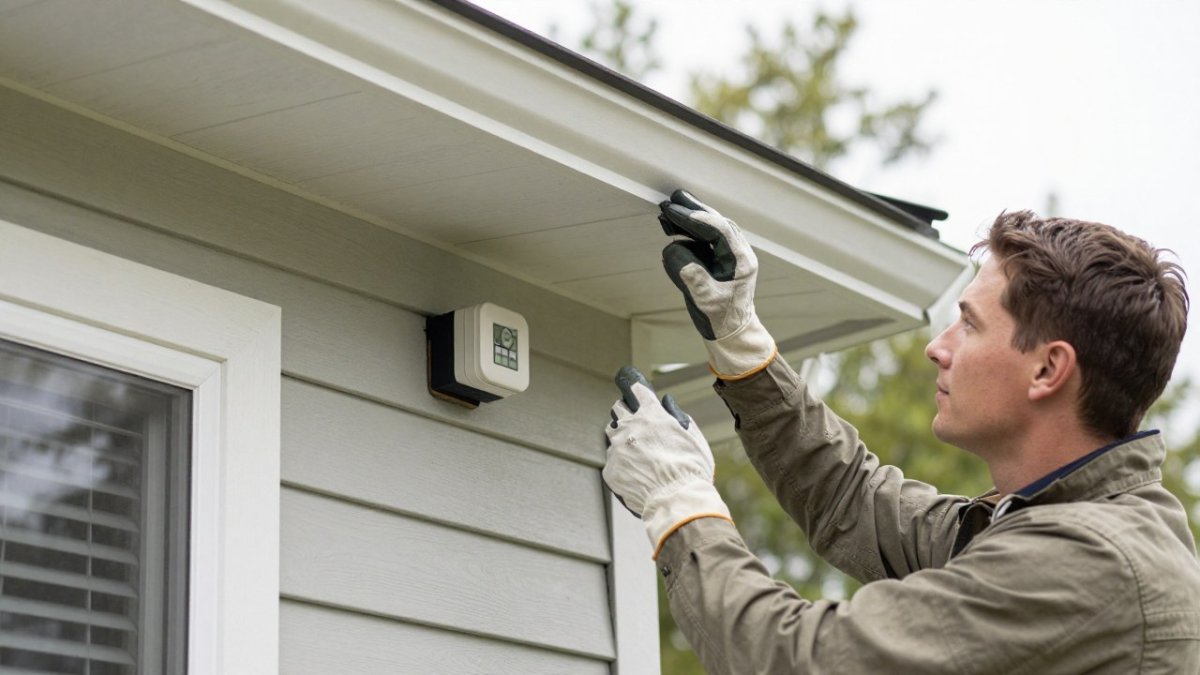
Exclusion is the standard humane method for bats.
Finding and Sealing Entry Points
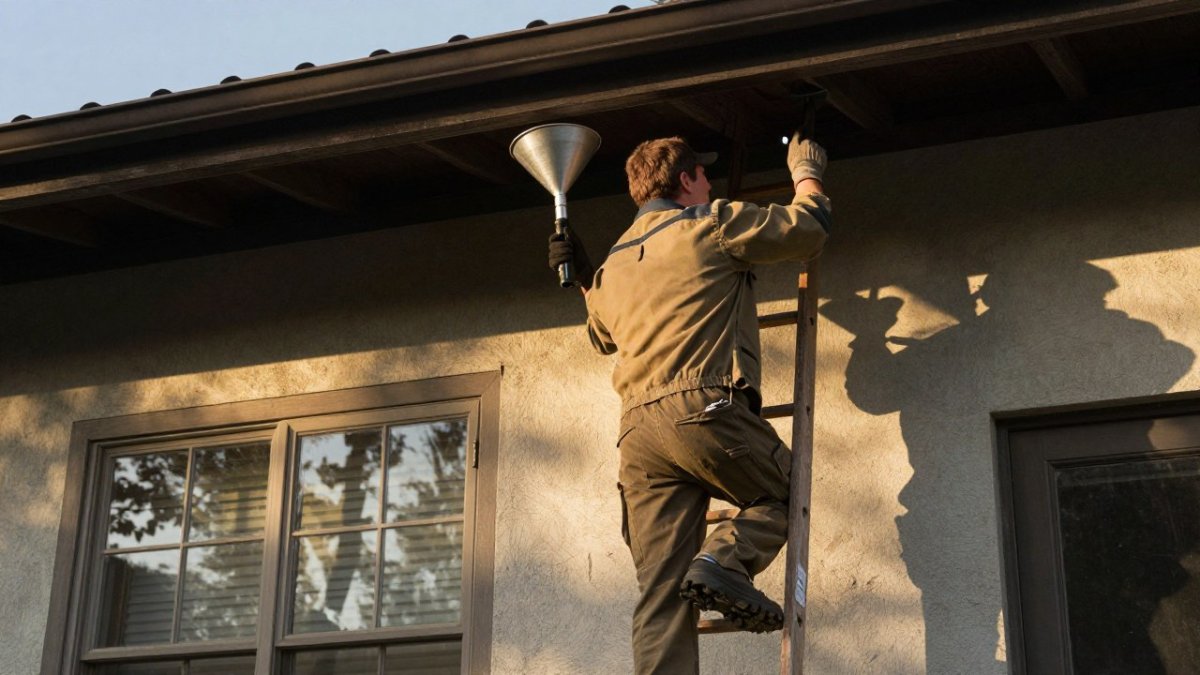
Bats can squeeze through gaps about the width of a pencil. Common entry points include roof vents, soffit gaps, chimney flashing and loose siding.
Timing Restrictions, Maternity Seasons and Pups
Exclusion must be timed carefully. During the maternity season, females raise young in the roost, and pups cannot fly. Removing the adults during this period can leave pups to die inside walls or attics. Many wildlife agencies restrict exclusion during this window. Check with your state wildlife agency before scheduling work, and ask any provider how they handle pups.
Exclusion timing and entry points matter most, so here is how the key facts line up.
| Item | Detail | Note |
|---|---|---|
| Gap size bats can use | About the width of a pencil | Small openings matter |
| Common entry points | Roof vents, soffit gaps, chimney flashing, loose siding | Check each one |
| Maternity season | Pups cannot fly | Exclusion must be timed carefully |
| Risk of exclusion in season | Pups may die inside walls or attics | Check state agency rules first |
Bat Removal Cost in the United States: What Shapes the Quote
There is no single bat removal price, and any company that quotes one over the phone without an inspection is guessing. What a written estimate should do is break the job into line items so you can see where the money goes. Most providers price bat work as a combination of the following, and each one moves the total up or down.
-
Colony size and species. A small colony of a few bats in a gable vent is a different job from a large maternity colony in an attic. Species matters too, because some bats are protected and the work must follow state rules.
-
Number and height of entry points. One gap at the eave is cheaper than several entry points along a two-story roofline that require ladders, lifts or roof access. Height and pitch add labor and safety equipment.
-
Repairs and follow-up. Damaged vents, loose siding or gaps found after the colony leaves may need repair. A follow-up inspection to confirm no bats remain is sometimes included and sometimes billed.
When comparing bids, ask for both exclusion and cleanup in writing. A reliable quote should list each element separately and state what happens if bats are found again.
Watch out: a quote that lumps everything into one number with no line items makes it hard to compare bids or to tell whether cleanup is included. Ask for the breakdown before you sign.
How to Vet a Bat Removal Provider Before You Book
Before you hire anyone, run through this checklist:
- Confirm the company holds a nuisance wildlife or wildlife control license for your state.
- Ask whether they use one-way exclusion instead of trapping.
- Ask how they handle the maternity season and pups.
- Ask whether the quote includes sealing and attic cleanup.
- Ask about a follow-up inspection to confirm bats have not returned.
- Request proof of licensing and insurance before work begins.
Legal Protections, Rabies Risk and Keeping Bats From Coming Back
Legal Protections and Timing Rules
Many bat species are protected under state wildlife rules, and some are also covered by federal law. In practice, that means you cannot simply kill bats or exclude them at any time of year. Most states set a maternity season during which exclusion is restricted or prohibited because pups cannot fly and would be trapped inside. The exact dates vary by state and by species, and some states require a permit for exclusion work. Before scheduling anything, check with your state wildlife agency or ask your provider to confirm the current window for your area. A provider who cannot tell you the local maternity dates is not current on the rules.
Rabies Risk and What to Do After Possible Exposure
Bats can carry rabies, and a bat that is active during the day, found on the ground, or unable to fly should be treated as a possible rabies exposure until proven otherwise (the CDC). Never handle a bat with bare hands (the CDC). If you find a bat in a room with a person who may have been bitten or scratched, or with a sleeping person, a young child, or someone who cannot reliably report contact, contact your local health department right away. Public-health agencies provide guidance on whether the bat should be tested and whether post-exposure treatment is recommended. Do not wait to see whether symptoms appear; rabies is preventable with timely medical care and is nearly always fatal once symptoms begin. If a bat must be captured for testing, do it without direct contact, and follow your health department's instructions.
Keeping Bats From Coming Back
Exclusion works only if the building stays sealed. Bats can squeeze through gaps about the width of a pencil, so small openings matter. Inspect your home each spring and after storms for new gaps at roof vents, soffit lines, chimney flashing and loose siding. Seal openings with durable materials such as metal flashing or steel mesh, not foam, which bats and rodents can chew through. Keep up with routine exterior maintenance, and if you see new droppings or hear scratching at dusk, schedule a follow-up inspection rather than waiting for the colony to grow.
Booking Your Bat Exclusion With Dukes Pest & Wildlife
If you think bats have moved into your home, contact us to discuss your options and request a quote. Dukes Pest & Wildlife serves Grove, Oklahoma and surrounding areas, and our family-owned team focuses on humane solutions that address the root cause.
Frequently Asked Questions
Will exterminators get rid of bats?
Many pest control companies do remove bats, but not all of them are licensed or equipped for it. Bats are protected or regulated wildlife in most states, so the right approach is humane exclusion: installing a one-way device that lets bats leave but blocks re-entry, then sealing the entry points. Ask the provider whether they hold a nuisance wildlife control license, not just a general pest license, and whether they handle bats specifically. Dukes Pest & Wildlife holds a Nuisance Wildlife Control License along with its General Pest License.
How much does it cost to have a bat removed?
Pricing depends on how many bats are involved, how many entry points need sealing, how high or hard to reach the access is, and whether cleanup of droppings is needed. Because costs vary from home to home, the best way to get an accurate figure is a written quote from the provider. Visit the Dukes Pest & Wildlife website for current pricing or to request a quote. Ask any provider to itemize exclusion, sealing, and cleanup separately.
Is it safe to remove bats from a home yourself?
Handling bats yourself is risky. Bats can carry rabies, and a bite or scratch may not be visible, so anyone who has contact with a bat should contact a health care provider right away. Exclusion also has to be timed correctly, since sealing a roost while pups are present traps them inside. A licensed nuisance wildlife professional is usually the better choice for this work.
How can I keep bats from coming back after removal?
The main way to prevent return is to seal every gap larger than about a quarter inch in the roofline, soffits, chimney caps, and siding after the bats have been excluded. Sealing should be done only after confirming no bats remain inside. Inspect the home each year before spring, and fix any new damage quickly. Dukes Pest & Wildlife focuses on addressing the root cause of pest problems.