 How-to
How Do You Fix Pest Damage in a House?
Last Updated: November 12, 2026
Quick Summary
To fix pest damage, first identify the pest and remove or control it, since repairs done while the infestation is active are wasted. Then cut back damaged wood to sound material, replace or reinforce structural members, and recheck the area in 30 days.
- Treat the infestation before making any repairs.
- Tap suspect wood and look in crawlspaces and attics to find hidden damage.
- Call a licensed contractor when damage is structural or affects load-bearing wood.
- Do not fill termite galleries with epoxy while the colony is still active.
- Fix the moisture source, since termites and carpenter ants prefer damp wood.
Table of Contents
- How to Fix Pest Damage: Start With an Honest Inspection
- Damage Severity Thresholds: When Repair Is Enough and When It Isn't
- Safety Checks Before You Start Any Repair
- Step 1: Remove or Control the Pest Before Repairing
- How to Fix Pest Damage on Wood, Step by Step
- How to Fix Termite Damage in Walls
- Termite Damage Repair Cost: What Affects the Price
- When to Hire a Termite Damage Repair Contractor
- Frequently Asked Questions
How to Fix Pest Damage: Start With an Honest Inspection
Pest damage rarely gets better on its own. Chewed, tunneled or hollowed wood keeps weakening, and the pests keep working. At Dukes Pest & Wildlife, we believe the first step is always the same: find out exactly what happened before you pick up a saw or a tube of filler.
Pest damage is any harm to a home's structure, finishes or contents caused by insects, rodents or other animals. Fixing it means removing the cause, repairing the damage and preventing a return; skipping any step turns small problems into expensive ones.
Most people start with the damage they can see, a mistake. A soft spot on a wall may be the visible edge of a tunnel that runs much farther. Walk the whole area, tap suspect wood with a screwdriver handle, and look in crawlspaces, attics, behind appliances and under sinks.
Identifying the Pest and the Type of Damage
The type of damage usually tells you what you are dealing with. Each pest leaves a different signature:
- Termites: Mud tubes on foundation walls, hollow-sounding wood, and small piles of pellets or wings near windows.
- Carpenter ants: Smooth, clean galleries cut into wood, plus sawdust-like frass (a mix of wood shavings and insect waste) below the holes.
- Rodents: Gnawed edges, grease marks along walls, droppings and shredded insulation.
- Bed bugs and cockroaches: Mostly a hygiene and furniture problem, with little structural damage.
A common mistake is assuming every hole came from the same pest. A house can have termites in the sill plate and rats in the attic, and each needs a different fix.
Checking for Moisture and Hidden Damage
Termites and carpenter ants both prefer damp wood. Wood above about 19% moisture content is at risk of decay; without a meter, look for soft wood, peeling paint, or mold near leaks, gutters and crawlspace vents.
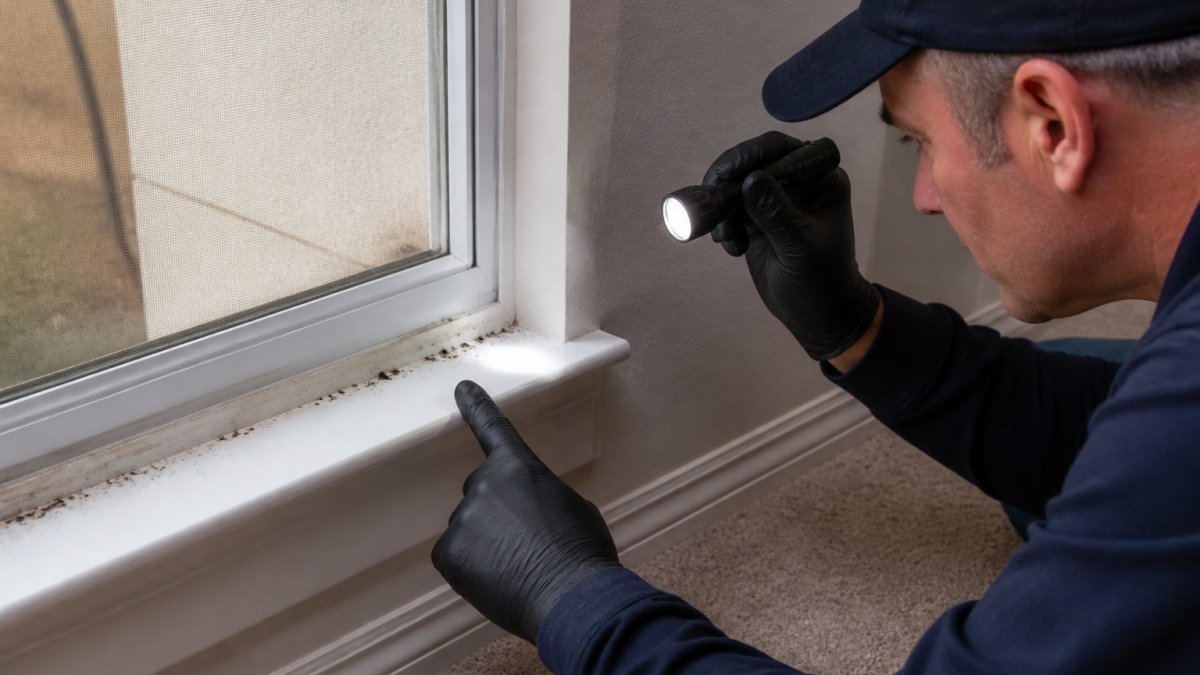
Hidden damage is common. Remove a small piece of trim or a loose outlet cover if you suspect a problem, shine a flashlight into the gap, and check whether the wood inside looks hollow or layered.
Damage Severity Thresholds: When Repair Is Enough and When It Isn't
Not every mark needs a contractor. Use these rough thresholds to decide:
| Damage Level | What You See | Usual Action |
|---|---|---|
| Cosmetic | Surface scratches or small nibbles on trim | Patch or repaint |
| Moderate | Small cavities, soft spots under 6 inches | Replace or fill, then treat the pest |
| Structural | Sagging floors, cracked joists, hollow beams | Bring in a licensed contractor |
| Ongoing | Activity continues after repair | Call a pest professional first |
The key question is whether the wood still carries weight. If a board flexes, sags or feels spongy, get a professional assessment before any load-bearing area is touched.
Safety Checks Before You Start Any Repair
Pest damage repair involves tools, chemicals and sometimes hidden hazards. Before you start:
- Turn off power to any circuit near the work area.
- Check for gas lines, especially when cutting into floors or walls.
- Wear a dust mask rated for wood dust and eye protection.
- Ventilate the space if you use epoxy, sealants or any pesticide.
- Confirm that the pest is gone or under control before you close up walls.
Watch out: Sealing a wall while termites are still active traps them inside and hides the problem from you for years.
Step 1: Remove or Control the Pest Before Repairing
Repairs that go in before the pest is gone are wasted money. Treat the infestation first. For termites, carpenter ants, bed bugs and many rodents, that means professional treatment with products and methods that are not safe or legal for most homeowners to apply on their own. Dukes Pest & Wildlife holds a General Pest License and a Nuisance Wildlife Control License, which covers both insects and nuisance wildlife such as raccoons and bats. National Pest Management Association guidance on pest control
Once you have treatment in place and the pest activity has stopped, you can begin repairs. Keep records of the treatment date so you know when to recheck the area.
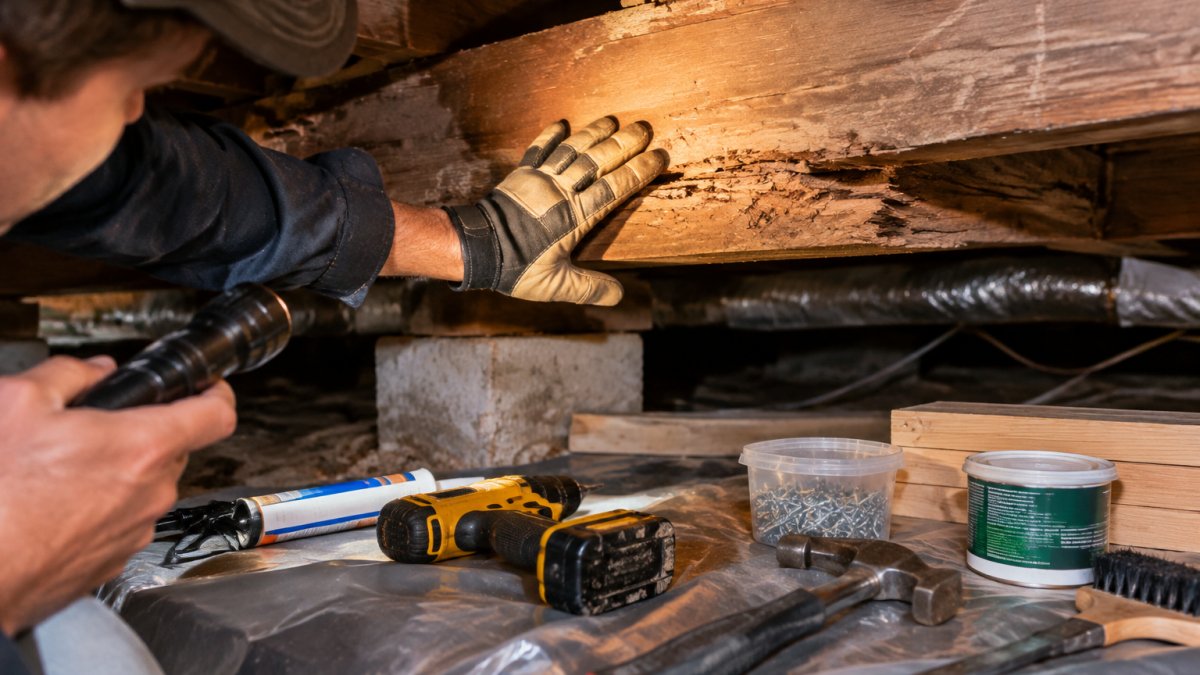
How to Fix Pest Damage on Wood, Step by Step
Wood repair is where most of the money and most of the mistakes happen. The sequence below works for any pest, but the repair decision changes by pest, so read the pest-by-pest guide first.
Before you cut anything, run these safety checks. Pest damage hides hazards that a cosmetic repair can expose:
- Structural instability. If a floor sags, a joist flexes, or a beam sounds hollow, do not stand on it. Shore it or call a licensed contractor before demolition.
- Electrical damage. Rodents gnaw wire insulation. Look for chewed sheathing, exposed copper, or droppings inside a junction box before cutting near an outlet. Turn off the circuit and verify it is dead with a non-contact tester.
- Contamination. Rodent droppings, urine, and nesting material can carry pathogens. Wear an N95 respirator, gloves, and eye protection, and dampen debris before sweeping.
- Hazardous materials. In homes built before the late 1970s, disturbed drywall, joint compound, and floor tile may contain asbestos; painted trim may contain lead paint. Do not sand or cut until you know what you are dealing with.
- Gas and plumbing. Know where the shutoffs are before cutting into a floor or wall cavity.
Step 2: Cut back to sound material. Use an oscillating multi-tool or reciprocating saw to remove soft or hollow wood until you reach solid stock.
Step 3: Clean and treat the cavity. Vacuum loose debris with a HEPA vacuum, then apply a borate-based preservative to the exposed wood. Borate-based preservatives are not a substitute for treating an active infestation.
Step 4: Replace or reinforce. Replace any section that cannot carry its load.
Step 5: Fill small gaps, sand, and finish. Use exterior-rated wood filler for shallow cosmetic gaps and a two-part epoxy filler where strength matters.
Step 6: Recheck in 30 days. Log the repair date. Fresh frass, new mud tubes, or renewed gnawing mean the pest was not fully controlled and the repair needs to come back open.
Pest-by-pest repair decisions. The right repair depends on what made the hole:
- Termites. Remove mud tubes and damaged wood, replace structural members, and correct the moisture source. Do not fill termite galleries with epoxy, the colony is still inside the wall until it is treated.
- Carpenter ants. The galleries are clean and smooth, so the wood often looks intact from outside. Tap along the member; a hollow sound means the interior is excavated. Replace saturated or heavily tunneled sections and fix the leak that attracted the ants.
- Rodents. Gnawed edges and contaminated insulation are the main issues. Remove soiled insulation, disinfect the cavity, seal entry points with copper mesh and sealant, and replace chewed wood only if it is structural.
- Wood-boring beetles. Look for small round exit holes and fine powder-like frass. Surface treatment may be enough for light activity; heavily infested structural wood usually needs replacement.
Watch out: Filling a hollow or damp piece of wood with filler hides the problem without restoring strength.
How to Fix Termite Damage in Walls
Termite damage inside a wall is a different job from damage on exposed wood.
1. Confirm the termites are gone. Do not open a wall while an active infestation is being treated.
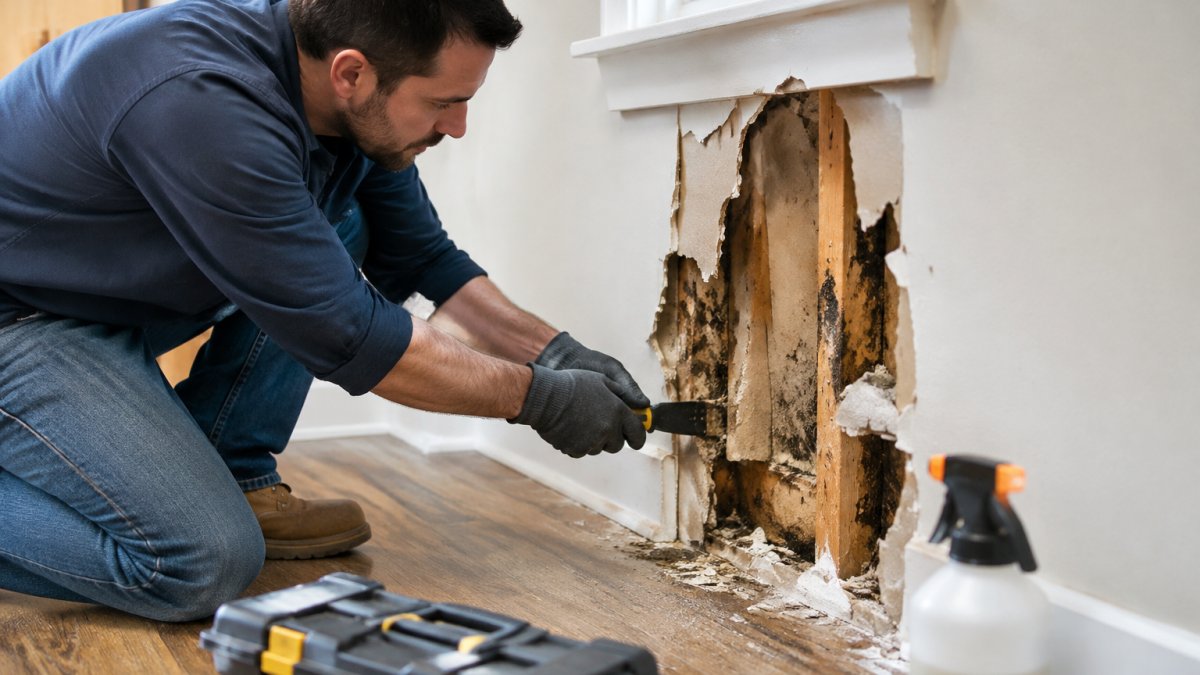
2. Open a small inspection hole. Cut a 6-by-6-inch opening above or below the suspected damage, or remove a section of baseboard.
3. Assess moisture and hidden damage. Termites need moisture, so find the source before you close the wall. Check for leaking lines, roof leaks, poor grading, and clogged gutters.
4. Apply severity thresholds. Cosmetic damage, paint cracks, small surface galleries on trim, can be patched.
5. Remove mud tubes and damaged material. Scrape away mud tubes and remove insulation that has been tunneled through. Cut back to sound wood.
6. Replace studs and blocking. Install new studs or blocking sized to match the existing framing. Use pressure-treated lumber where the wood contacts masonry or concrete.
7. Close the wall correctly. Use fire-rated drywall near a shared wall, furnace room, or attached garage.
8. Document and recheck. Keep the inspection photos, treatment records, and repair receipts together.
Cost and insurance considerations. Termite damage repair cost depends on how much framing needs replacement, how accessible the cavity is, and whether the damage is structural.
Watch out: Sealing a wall while termites are still active traps the colony inside and hides the problem until the damage is much larger.
Termite Damage Repair Cost: What Affects the Price
Repair cost depends on how much wood needs replacing, how accessible it is, whether the damage is structural, and whether pest treatment is also needed. Pricing depends on the scope of the work. For current prices, visit the Dukes Pest & Wildlife website or request a quote.
When to Hire a Termite Damage Repair Contractor
Call a licensed contractor when the damage is structural, when more than a small area is affected, when you need electrical or plumbing work moved, or when you are not comfortable with the repair. Ask any contractor for proof of license and insurance, and request a written scope of work before any demolition starts.
For pest activity itself, Dukes Pest & Wildlife can help with treatment of the infestation. Oklahoma Construction Industries Board licensing information
Pest damage is easier to fix when you deal with the cause first and the wood second. Dukes Pest & Wildlife has served Grove and Miami families for over 40 years, and we would be glad to inspect your home, explain what we find and help you plan the repair. Call us or request a quote today.
Frequently Asked Questions
Is it possible to fix termite damage?
Yes, in most cases. Termite damage can be repaired once the active infestation is removed or controlled. Minor damage often needs only wood filler, epoxy, or reinforcing supports. Structural damage usually requires cutting out and replacing the affected sections of joists, studs, or sills. Before repairing, confirm the colony is gone, because repairs done over live termites will be damaged again. A licensed pest professional can confirm treatment is complete, and a qualified contractor can handle the structural work.
How much does termite damage repair cost?
Termite damage repair cost depends on how much wood is affected, where it is located, how accessible it is, and whether the repair is cosmetic or structural. Small wood-filler jobs cost far less than replacing load-bearing framing. Pricing depends on the scope of work and the contractor's rates. For a price specific to your home, request a quote from a local professional.
When should you hire a contractor to repair pest damage?
Hire a contractor when damage affects load-bearing framing, sills, joists, or wall studs, when the damage spans a large area, or when you are unsure whether the structure is safe. A contractor is also worth calling if repairs involve opening walls or electrical or plumbing work. Make sure any contractor is licensed and insured. Pest control and structural repair are separate jobs, so confirm the pest source is addressed first.
How do you fix pest damage in walls?
Start by removing or controlling the pest and confirming it is gone. Open the affected drywall or plaster to expose the damaged studs or framing. Cut out and replace severely damaged wood, and reinforce weakened members with sister boards or added supports. Fill small voids with wood filler or epoxy, then patch the wall surface. Check for moisture sources, since damp wood attracts pests and rots faster.