 How-to
Is Safe Bat Removal Possible for Homeowners?
Quick Summary
Safe bat removal is possible for most homeowners, but it depends on the situation. A single bat in a room can often be removed by following careful steps, while a colony in an attic or wall usually calls for a licensed professional using one-way exclusion devices.
- Close interior doors, turn off ceiling fans, and open an exterior exit before approaching the bat.
- Wear thick leather gloves and long sleeves, and never handle a bat with bare hands.
- Sealing a colony while young bats are inside can trap them, so wait until they can fly.
- Treat any bat contact or bite as a possible rabies exposure and call your doctor the same day.
- Ask about licensing, exclusion methods, and whether all entry points get sealed before hiring.
Table of Contents
- Safe Bat Removal Starts With Knowing What You're Dealing With
- What to Do If a Bat Is in Your House
- Step-by-Step Guide to Containing and Removing a Single Bat
- Bat Exclusion From Attic and Building Colonies
- Timing, Legal Rules and Protecting Dependent Young
- What Safe Bat Removal Costs and What Affects the Price
- Who to Call for Bat Removal in Northeast Oklahoma
- Book Your Bat Inspection With Dukes Pest & Wildlife
- Frequently Asked Questions
Safe Bat Removal Starts With Knowing What You're Dealing With
Safe bat removal is possible for most homeowners, but only if you know what kind of bat problem you have. A single bat in a room is a different job than a colony living in an attic.
Bats are protected in many areas, and handling them the wrong way can put you and the animal at risk.
Single bat versus colony. One bat that flew into a room is usually a one-time problem.
Signs of an active roost:
- Dark stains or droppings (guano) on the floor, walls, or insulation
- Squeaking or scratching sounds at dusk and dawn
- A musty odor in an attic or upper floor
Knowing which situation you're in decides what comes next.
What to Do If a Bat Is in Your House
If a bat gets inside, stay calm and keep everyone away from it.
Close interior doors to limit where the bat can go. Turn off ceiling fans.
Most bats leave on their own when they have a clear exit. Give it time before you try anything else.
Before you act, check these points:
- Keep pets and kids out of the room
- Don't swat, chase, or throw things at the bat
- Wear thick gloves if you must go near it
Many people wonder whether a bat in the house is an emergency. In most cases, it's not, but any bat that might have touched a person or pet needs prompt attention.
Step-by-Step Guide to Containing and Removing a Single Bat
You can often remove a single bat safely by yourself if the bat is calm and the room is small. The goal is to avoid direct contact, avoid injuring the bat, and avoid losing track of it in the house.
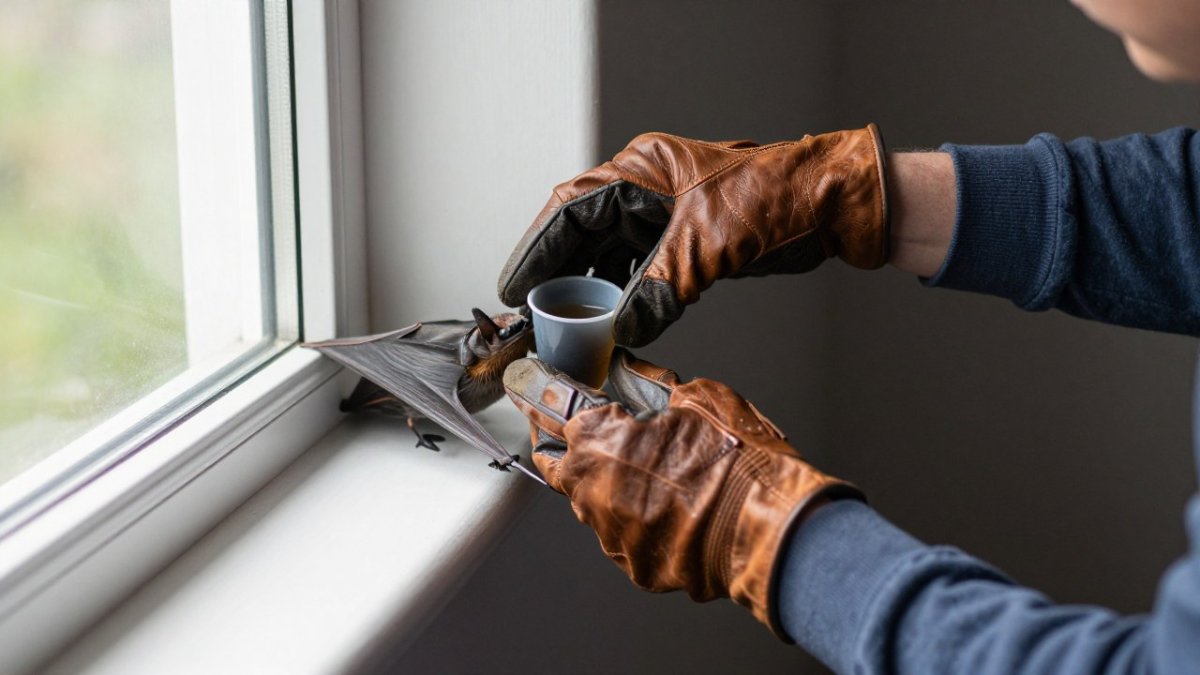
- Close off the room. Shut interior doors and block the gap under the door with a towel. Cover vents, fireplace openings, and any gap wider than a pencil where the bat could slip out. Turn off ceiling fans so the bat is not knocked around or pushed into a corner.
- Gear up. Put on thick leather gloves and long sleeves. Bats have delicate wings and sharp teeth, and a frightened bat can bite through thin fabric. Do not use bare hands, even if the bat looks dead.
- Give it a clear exit first. Open an exterior door or window, dim the lights, and leave the room. Many bats leave on their own within a few minutes to an hour when they see a dark opening to the outdoors. Watch from a distance rather than standing in the room.
- Wait for it to settle. If the bat does not leave, wait until it lands on a wall, curtain, or floor. A resting bat is far easier to work with than one flying around. Do not chase it or swat at it.
- Cover it with a container. Place a sturdy box, shoebox, or plastic container over the bat, then slide a stiff piece of cardboard underneath to trap it against the surface. Work slowly so you do not crush the bat or pinch a wing.
- Carry it outside. Take the covered container outdoors, set it on a raised surface away from the door, and slide the cardboard free. Release the bat at dusk if possible, and let it fly off on its own. Do not throw it or drop it from a height.
- Verify the room is clear. Before you reopen the room to family and pets, close the exterior opening and check curtains, behind furniture, and inside closets. A bat that was not actually removed can turn up later in another room.
Avoid direct skin contact at every step. If you cannot safely contain the bat, or if it is flying erratically and you cannot isolate it, call a professional rather than forcing the process.
What to Do If You Had Possible Contact or Were Bitten
If a bat bit you, touched your skin, or was found in a room with someone who was asleep, treat it as a possible rabies exposure. Bats are the main rabies carrier in the United States, and rabies is fatal once symptoms start, so treatment decisions cannot wait for symptoms to appear (the CDC).
Keep the bat if you can do so safely and without direct contact.
For pets, contact your veterinarian the same day.
A common pattern is that people underestimate a bat found near a sleeping person because there is no visible bite. Bat teeth are small, and a bite can go unnoticed.
The article lays out the single-bat removal steps in order, with the time or condition for each.
| Step | What to do | Timing or condition |
|---|---|---|
| 1. Close off the room | Shut interior doors, block gaps, turn off ceiling fans | Before anything else |
| 2. Gear up | Thick leather gloves and long sleeves | Before approaching the bat |
| 3. Give a clear exit | Open an exterior door or window, dim lights, leave room | Bat often leaves within minutes to an hour |
| 4. Wait for it to settle | Let the bat land; do not chase or swat | Wait until it lands on a surface |
| 5. Cover it | Place a sturdy container, slide cardboard underneath | Work slowly to avoid crushing or pinching |
| 6. Carry it outside | Release at dusk on a raised surface, away from the door | Release at dusk if possible |
| 7. Verify the room is clear | Seal exterior opening and check curtains, furniture, closets | Before reopening room to family and pets |
Bat Exclusion From Attic and Building Colonies
A colony in an attic or wall is not a job for a single homeowner.
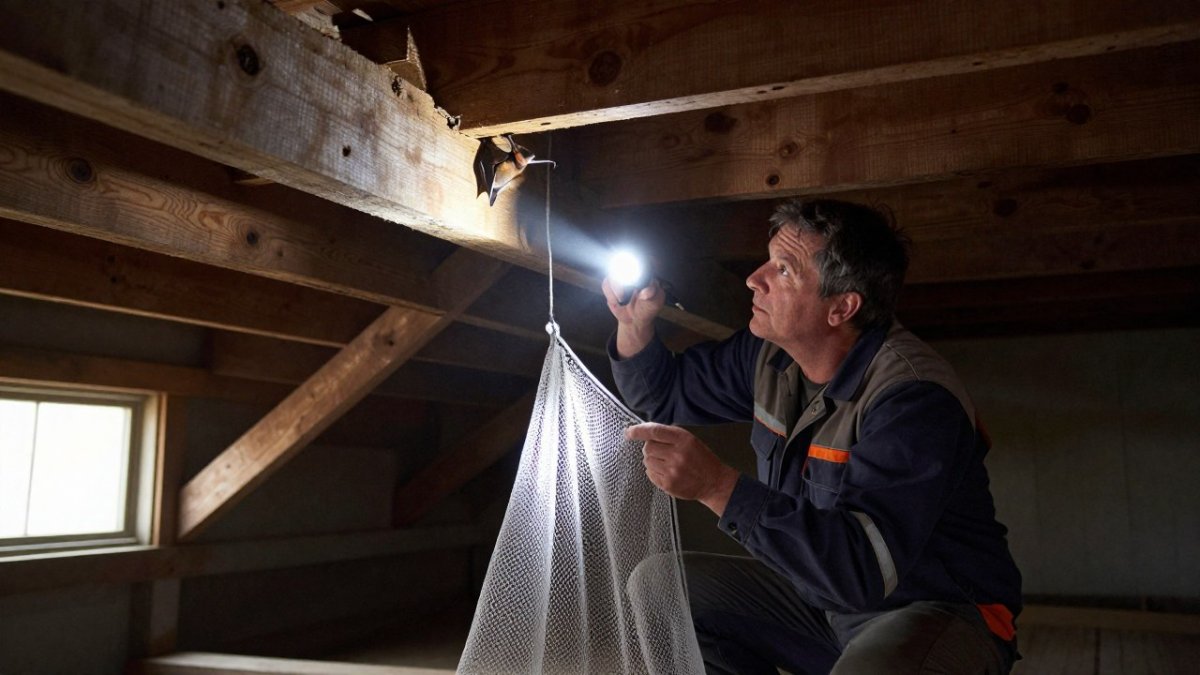
Exclusion means letting the bats leave and then blocking them from returning. Specialists usually install one-way exclusion devices, often called bat valves.
How exclusion usually works:
- The bats are observed leaving to find where they exit.
- One-way valves are installed over the exits.
- Once the colony has left, the openings are permanently sealed.
Timing matters. Sealing a building while young bats are still inside can trap and kill them. Many experts recommend exclusion only once the young can fly, which is usually later in summer.
Exclusion Inspection Checklist and Common Entry Points
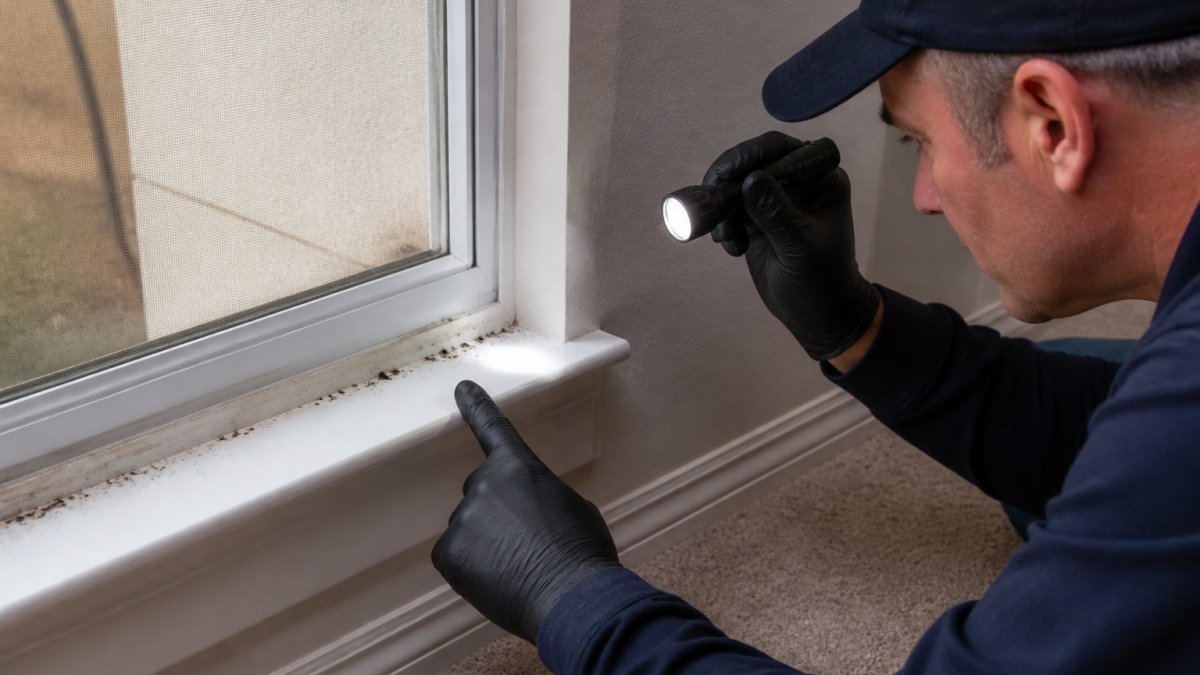
A thorough inspection finds every way in. Check these spots:
- Gaps where roof edges meet walls
- Openings around vents, chimneys, and soffits
- Cracks in siding, brick, or flashing
After exclusion, seal each gap with durable caulk or metal mesh. Recheck the building a few weeks later for signs of re-entry.
Timing, Legal Rules and Protecting Dependent Young
Bat rules vary by state, county, and species. Some bats are protected year-round, and some protections apply only during certain seasons. Check with your state wildlife agency or local animal control before you start.
Timing is one of the biggest factors. Pregnant bats and nursing mothers often roost in buildings in spring and early summer. If you seal an entry point while non-flying pups are inside, they can die and create odor and pest problems.
Good timing practices:
- Ask a specialist to confirm whether young are present before sealing.
- Plan exclusion for late summer or early fall when young can fly.
- Confirm permit rules before any removal work begins.
What Safe Bat Removal Costs and What Affects the Price
Safe bat removal pricing depends on the scope of the work. Pricing depends on the scope of the job, so contact Dukes Pest & Wildlife through its website for a current quote.
What drives the price:
- Number of entry points. A colony using one gap is a smaller job than a colony using six. Each opening needs its own one-way device and its own permanent seal.
- Height and access. Roof peaks, gable vents, and chimney gaps may require ladders, lifts, or roof work, which add labor and safety cost.
- Colony size and species. A small group of a common species is simpler than a large colony or a protected species with seasonal restrictions.
- Timing. If work must wait until young bats can fly, the job may be scheduled weeks out, and some companies charge for a return visit to confirm the colony has left.
Questions to ask before hiring:
- Are you licensed for nuisance wildlife work in this state, and can you show the license?
- Do you use one-way devices, and do you remove them after the bats leave?
- Do you seal every opening, or only the main one?
- Is cleanup of droppings included, or is it a separate charge?
Ask for a written scope that separates removal, sealing, cleanup, and any warranty so you can compare quotes on the same basis.
Who to Call for Bat Removal in Northeast Oklahoma
For a single bat in a room, you can often handle it yourself using the steps above. For a colony, possible contact with a bat, or any question about legal protections, call a licensed professional.
Dukes Pest & Wildlife holds a rare Nuisance Wildlife Control license, which covers humane removal of bats, raccoons, and opossums. We serve Grove, Miami, and the surrounding area within a 30-mile radius. Learn more about licensed nuisance wildlife removal.
Anyone comparing options should ask about licensing, exclusion methods, and whether the company seals entry points after the bats leave. See how pest companies typically handle bat removal before you choose a provider.
Book Your Bat Inspection With Dukes Pest & Wildlife
If you think bats have moved into your home, don't wait for the problem to spread. A short inspection can show whether you're dealing with one bat or a colony, and what exclusion will involve.
Contact Dukes Pest & Wildlife today for a free estimate and a clear plan for safe, humane bat removal in Northeast Oklahoma.
Frequently Asked Questions
What is the safest way to remove bats from my home?
The safest approach is to avoid direct contact, keep the bat contained in one room, and then arrange a humane exit or professional removal. For a single bat indoors, close off the room, open an exterior door or window, and wait for the bat to leave on its own, ideally at dusk. For colonies in an attic or wall void, one-way exclusion devices let bats leave but not return, and they should be installed by a licensed wildlife control operator who can also seal entry points afterward.
What should I do if I saw a bat in my house and now I can't find it?
Close the doors to the room where the bat was seen, and keep pets and children out. Bats often wedge into curtains, folds in fabric, or gaps behind furniture, so check those areas carefully while wearing thick gloves. If you still cannot locate it after a thorough search, contact a licensed wildlife professional. Do not assume the bat has left, because a bat that is missing may still be roosting nearby.
Can I remove bats from an attic without harming them?
Yes, when it is done correctly and at the right time of year. Bats are protected in many areas, and removing a colony during the period when young cannot yet fly can trap pups inside and cause them to die. Exclusion should be timed so that all adults can leave and young are fully volant, and the work should follow applicable state and federal wildlife rules. A licensed nuisance wildlife operator can confirm the timing and install one-way devices correctly.
Who should I call for bat removal?
Call a licensed nuisance wildlife control operator, especially if the bats are in an attic, wall void, or multiple rooms, or if you may have had contact with a bat. Dukes Pest & Wildlife holds a Nuisance Wildlife Control License and serves homeowners in Grove, Miami, and surrounding Northeast Oklahoma communities. Ask for a written inspection, a clear explanation of the exclusion method, and a plan for sealing entry points so the problem does not return.