 Ultimate guide
Identifying Termite Damage in Oklahoma: A Homeowner's Guide
Last Updated: November 21, 2026
Quick Summary
Termite damage shows up as mud tubes on foundations and piers, hollow-sounding or sagging wood, bubbling paint, and discarded wings near windows. Subterranean termites feed from the inside out, so damage often hides behind walls and under floors until the structure is compromised.
- Mud tubes are pencil-width tunnels of soil and wood particles on foundations, piers, and crawl space walls.
- Break open a mud tube with a screwdriver: fresh workers within a day or two means an active colony.
- Swarmers in spring leave discarded wings near windows, doorways, and light fixtures.
- Tap wood with a screwdriver: damaged wood gives way easily or reveals galleries when pierced.
- Schedule a professional inspection if you find any of these signs, since rot and termite damage can coexist.
Table of Contents
Termite damage is one of the costliest problems a homeowner can miss, and in Oklahoma it often stays hidden until the structure is already compromised. At Dukes Pest & Wildlife, we help Grove and Miami homeowners find termite damage early. Subterranean termites feed from the inside out, so a house can look fine from the street while its framing hollows out behind the drywall. Knowing what to look for, and where, is the first step toward protecting your investment.
Subterranean termites are the most common species that damage homes in this region. They live in soil and move through mud tubes to reach wood, which means they rarely show themselves in the open. Termite damage is often a termite infestation that has been active for months or years before anyone notices a problem. Many homeowners only discover it during a renovation, a sale inspection, or after a floor begins to sag.
Damage often concentrates where wood contacts soil, such as sill plates, subfloor joists, and crawl space framing, which are areas most homeowners never inspect closely.
Early warning signs can be subtle, so this guide walks through them in the order a homeowner is most likely to encounter them, from the exterior of the house to the interior walls and floors. We'll also explain how to tell termite damage from wood rot, how to read frass and other evidence of active infestation, and when to bring in a professional.
Early Warning Signs of Termites Around the Outside of Your Home
Start your inspection outside, where termites first leave evidence. Walk the perimeter of your foundation, paying attention to where soil meets siding, wood trim, and any structural wood near the ground. If you find gaps or openings, learn how to seal them to keep pests out. Look for changes that suggest activity rather than a one-time event.
Mud Tubes on Foundations, Piers, and Crawl Space Walls
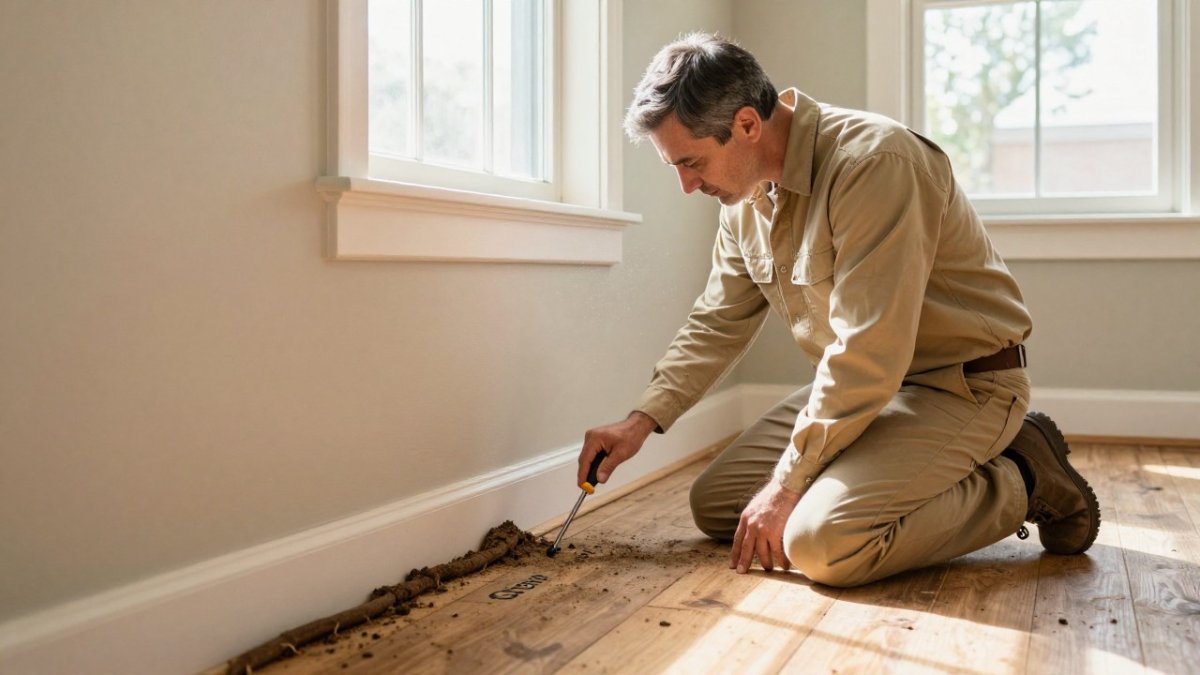
Mud tubes are pencil-width tunnels made of soil and wood particles that subterranean termites build to travel between their colony and food sources. They are the most recognizable early warning sign. Check the foundation walls, concrete piers, and the inside of crawl space walls, where tubes often run along the surface of masonry or up the sides of support posts.
If you find a mud tube, break a small section open with a screwdriver. Active tubes will show workers and fresh material within a day or two, while abandoned tubes are dry and cracked. Either result is worth reporting, since an abandoned tube can still mark a colony that remains nearby.
Swarmers and Discarded Wings in Spring
Winged reproductive termites, called swarmers, emerge from mature colonies to establish new ones (termite issue). In Oklahoma, swarms are most often observed in spring, typically after warm, humid weather. Swarmers look similar to flying ants, but termites have straight antennae, a thick waist, and two pairs of wings of equal length.
After a swarm, termites shed their wings near windows, doorways, and light fixtures. A small pile of discarded wings on a windowsill or near a porch light is a strong indicator that a colony is nearby. Finding wings is not proof of damage on its own, but it should prompt a closer inspection of the structure.
Signs of Termites in Walls, Floors, and Paint
Interior signs often appear after termites have been feeding for some time. Many homeowners first notice a problem when a surface changes appearance rather than when they see the insects themselves.
Pay attention to paint that bubbles, blisters, or warps, especially along baseboards and door frames. Moisture from tunnels behind the surface can push paint outward. Wood flooring that buckles or develops soft spots, and drywall or trim that feels hollow when tapped, are also common warning signs. Run a screwdriver along exposed wood. Sound wood resists, while damaged wood gives way easily or reveals galleries when the surface is pierced.
Termite Damage vs. Wood Rot: How to Tell Them Apart
Termite damage and wood rot can look similar, but the causes and the fixes are different. Wood rot requires moisture and fungi, so it usually appears where water has been sitting. Termite damage follows tunnels and galleries that run along the grain.
Look at the pattern. Termite galleries are typically clean, with smooth channels cut through the wood and often packed with mud. Rot tends to be soft, crumbly, and discolored, and it often shows a cubed or cracked texture. Check for moisture sources such as leaking gutters, poor grading, or plumbing leaks. If the wood is damp and rotting but shows no tunnels, moisture is the likely cause. If the wood is dry and hollowed with tunnel patterns, termites are more likely responsible.
Because termite damage and rot can coexist, a professional inspection is the most reliable way to separate the two.
Reading Termite Frass and Other Evidence of Active Infestation
Frass is the term for termite droppings, and it is one of the best indicators of an active infestation. Drywood termites push frass out of small kickout holes in wood, forming small pellet piles beneath them. Subterranean termites do not produce the same kind of pellet piles, so their presence is usually revealed by mud, wood galleries, and live insects.
Active infestations tend to show fresh mud tubes, insects that move when disturbed, and wood that feels damp or shows recent tunneling. Old or repaired damage will show dry tubes, weathered galleries, and signs of previous treatment or repair. Telling these apart matters: an active colony needs immediate action, while old damage may need only structural assessment and monitoring.
If you find frass, do not sweep it away. Photograph it, note its location, and check whether new piles appear over the next few weeks.
Room-by-Room Termite Inspection Checklist and Severity Assessment
Use this checklist to inspect the inside of your home methodically. Work through each area and note anything that looks abnormal.
- Kitchen and bathrooms: Check under sinks, around plumbing penetrations, and along baseboards near water sources, since moisture attracts termites.
- Living areas: Tap baseboards, door frames, and window trim. Look for paint changes and check hardwood or laminate for buckling.
- Bedrooms: Inspect closet floors and the base of exterior walls, where drywall meets the floor.
- Basement or crawl space: Look at sill plates, floor joists, and support posts. Check for mud tubes and hollow-sounding wood.
- Attic: Look for wings near vents and check rafters and roof framing for signs of tunneling, especially near the roofline.
Once you have findings, assess severity. Minor issues include isolated mud tubes, a few discarded wings, or small paint blisters with no structural softness. Moderate issues include multiple tubes, hollow-sounding framing in several rooms, or buckling floors. Severe damage is indicated by sagging floors, compromised joists or sill plates, or damage that extends across multiple areas of the home. Any structural damage should be evaluated by a qualified professional before repairs begin.
Booking a Termite Inspection With Dukes Pest & Wildlife
If you've found any of the signs described in this guide, a professional inspection is the next step. Our team at Dukes Pest & Wildlife can help you understand whether you are dealing with an active infestation or old damage. You can learn more about our complete termite control and prevention services before you call, and our structural pest control experts can help protect your property beyond termites.
Pricing depends on several factors, so visit the Dukes Pest & Wildlife website for current prices or to request a quote. Homeowners who want an idea of costs before calling can review how much a termite inspection costs in 2026. If you're in Grove or nearby, our local pest control team in Grove, OK is ready to schedule a visit and give you a free estimate. As a family-owned, local business, we're happy to answer your questions before we ever set foot on your property.
Frequently Asked Questions
How can you tell how bad termite damage is?
Severity depends on how much of the wood is hollowed out and whether structural members such as joists, sill plates, or load-bearing studs are affected. Surface galleries under paint or flooring may be cosmetic, while damage that makes a beam sag, a floor feel soft, or doors stick in their frames points to structural impact. Because hollowed wood can look intact from the outside, a licensed pest professional should probe suspect areas and estimate the extent of damage before any repair decisions are made.

What can be mistaken for termite damage?
Wood rot from moisture, carpenter ant galleries, water staining, and old repairs can all resemble termite damage. Rot is usually soft and crumbly and tends to follow leaks or poor drainage, while termite damage often leaves thin mud-lined galleries and a hollow sound when tapped. Careful inspection of moisture sources and the presence of frass or mud tubes helps separate these look-alikes from active termite activity.
What does termite frass look like?
Subterranean termites do not produce frass the way drywood termites do, so their evidence is usually mud and soil rather than pellets. Drywood termites push small, six-sided fecal pellets out of kick-out holes, and these pellets often collect in small piles under infested wood. Finding pellets that look like coarse sawdust or sand near wood is a strong sign of an active infestation that should be confirmed by a professional.
When should you call a pest professional about suspected termite damage?
Call a licensed pest professional as soon as you find mud tubes, swarmers or discarded wings, hollow-sounding wood, or buckling floors and blistered paint that you cannot explain. Early inspection limits further damage and helps determine whether the activity is current or old. Dukes Pest & Wildlife serves homeowners in Grove and surrounding Northeast Oklahoma communities, and you can request a quote through the company website for a current inspection.